What Is a Conversion System?
A conversion system is the bridge between trust and action.
It’s the structure that allows you to clearly present your offers, communicate their value, and guide someone toward a next step without pressure. It answers the questions your audience is already asking: What do you offer? Is this right for me? What happens next? How do I get started?
Without a system, selling often relies on in-the-moment effort—over-explaining, second-guessing, or trying to say the “right” thing. With a system in place, conversion becomes calm, consistent, and aligned.
Why Selling Feels Uncomfortable for So Many Entrepreneurs
For many entrepreneurs, selling feels uncomfortable not because they don’t believe in what they offer, but because it becomes disconnected from how they naturally build relationships.
What feels genuine in conversation can suddenly feel forced when it’s time to invite someone to take the next step.
Sometimes there’s a fear of being pushy. Other times, the offers themselves aren’t fully clear, or there are too many options, which creates hesitation instead of momentum. Inconsistent messaging adds to the confusion, and without a clear pathway from content to action, people are left unsure of what to do next—even when they’re interested.
When there’s no conversion system, every decision has to be made in real time. That’s what makes selling feel heavy and draining.
Systems change that. They remove friction, create clarity, and allow the process to feel steady instead of emotional.
The Role of Trust in Conversion
People don’t convert because they’ve been convinced or persuaded. They convert because they feel clear, supported, and confident in the decision they’re making.
Your nurture system builds emotional trust over time through consistent, meaningful touchpoints. Your conversion system builds decision trust by making the next step clear and easy to take.
When both are in place, saying yes feels natural rather than forced.

When Selling Stopped Feeling Like Selling
There was a client I worked with who cared deeply about the people she served. She was showing up consistently, creating thoughtful content, and having meaningful conversations. But when it came time to invite someone to work with her, everything seemed to stall.
She told me, “I feel like I’m doing everything right… until I have to actually say what I offer.”
What stood out was that people were already interested. They were replying to her emails, engaging with her content, and asking questions. The trust was there. But the path forward wasn’t clear.
When we looked at her business together, it became clear this wasn’t a confidence issue. It was a conversion system issue.
Her offers weren’t clearly defined, her messaging shifted depending on the conversation, and there wasn’t a simple, repeatable way for someone to take the next step. So every time someone was ready, she had to figure it out in the moment.
That’s where the discomfort was coming from.
We didn’t change how she connected with people. We simply created structure around what was already working. We clarified her offers, simplified her messaging, and created a clear pathway for someone to move forward. We also added consistent, gentle invitations into her content so she didn’t feel like she had to switch into “selling mode.”
A few weeks later, she said something that captured the shift perfectly:
“It finally feels like I’m just continuing the conversation instead of starting a sales pitch.”
That’s what a strong conversion system does. It removes pressure and replaces it with clarity, so the decision to move forward feels like a natural next step.
The Core Elements of a Conversion System
A strong conversion system isn’t built on urgency or pressure. It’s built on clarity, simplicity, and consistent support.
First, your offers need to be clear and focused. When your audience understands exactly what you provide, who it’s for, and what outcome it supports, it becomes much easier for them to say yes. Too many offers or unclear messaging create friction, while simplicity creates momentum.
Second, the pathway to take action should be obvious and easy. Whether it’s booking a call, making a purchase, or joining a program, the next step should feel effortless. If people have to search for how to work with you, even strong interest can fade.
Third, invitations should be consistent, not constant. You don’t need to be selling all the time, but you do need to regularly open the door. When invitations are naturally woven into your content and communication, selling begins to feel like a conversation instead of a push.
Finally, your system should support follow-up. Most people don’t make a decision the first time they encounter an offer. Thoughtful follow-up—through emails, reminders, or nurture sequences—helps support the decision-making process in a way that feels steady and respectful.
Conversion Should Feel Supportive — Not Stressful
When these elements are in place, conversion becomes supportive instead of stressful.
It respects timing, honors readiness, and allows people to move forward when it feels right.
And just as importantly, it supports you.
Instead of carrying the emotional weight of every decision, the process becomes reliable. You’re no longer trying to figure it out each time. You’re simply guiding people through a clear, established path.
How Conversion Fits Into the Bigger Picture
Conversion is not a standalone activity. It’s part of a larger system within your business.
Discovery brings people into your world. Nurture builds trust over time. Conversion provides clarity for the next step.
When these systems work together, your business feels steady and aligned instead of reactive. Growth becomes more sustainable because it’s supported by structure, not effort alone.
You Don’t Need to Sell Harder — You Need a Better System
If selling feels inconsistent or uncomfortable, it’s easy to assume it’s a mindset problem. But more often than not, it’s a systems problem.
When your conversion system is clear and intentional, selling stops feeling like something you have to push. It becomes a natural extension of the relationship you’ve already built.
You don’t need to sell harder. You need a system that supports how you naturally connect, serve, and guide people forward.
And when that system is in place, everything begins to feel lighter—not just for your audience, but for you as well.
If you’re starting to notice where things feel heavier or unclear in your own process, that awareness is the first step toward creating something more supportive.
If you’re starting to see where your conversion process feels unclear or heavier than it needs to be, that’s not a sign to push harder—it’s a sign to create better support.
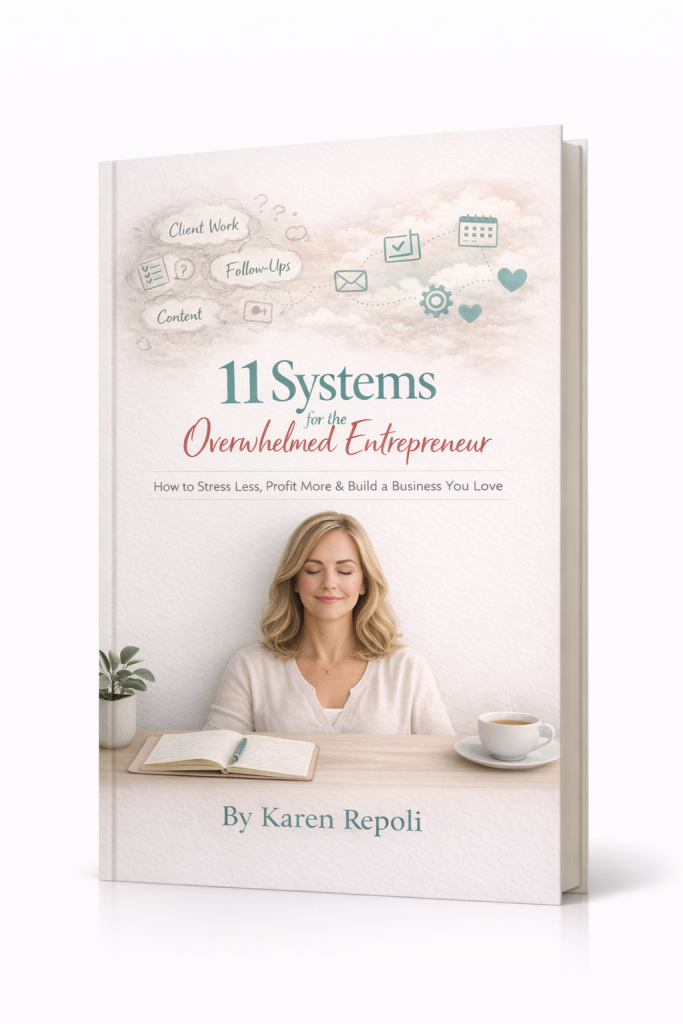
This is exactly what I walk you through in 11 Systems for the Overwhelmed Entrepreneur—so you can build a business where discovery, trust, and conversion all work together in a way that feels steady and natural.
You can learn more here.